
By Mike, Red Brick Chimney Services | Reviewed by Mason or certified sweep name and role | Last updated October 2026
| Short answer: A chimney sweep cleans your chimney by removing soot, creosote and debris. A chimney inspection checks its condition, including the masonry, crown, flashing, liner and damper, to find damage a clean flue will not show. Sweeping is maintenance and inspection is diagnosis. Most chimneys need both, and a sweep alone does not prove your chimney is safe. |
If you’ve been quoted for a sweep and an inspection, it’s fair to wonder whether you’re paying twice for the same visit. You aren’t, but the two jobs overlap more than most homeowners expect, and some companies use the terms loosely.
This guide explains the difference between a chimney inspection and a chimney sweep, what each one can and can’t tell you, when to book which, and what to ask before you hire. It also covers why the damp Lower Mainland climate is a good reason not to skip the inspection.
In this guide
- What does a chimney sweep do?
- What does a chimney inspection check?
- The difference at a glance
- Can a sweep also inspect your chimney?
- Do you need both?
- Inspection levels explained
- How often you need each
- Why Vancouver homeowners shouldn’t skip the inspection
- What happens if damage is found
- Questions to ask before you book
- FAQ
What Does a Chimney Sweep Do?
A chimney sweep cleans the flue and the parts of the system connected to it. The goal is to remove what builds up when wood or other fuels burn: soot, ash and creosote, a tar-like residue that is flammable. Sweeping also clears blockages such as leaves or nests that can stop smoke and gases from venting properly.
A typical sweep works like this:
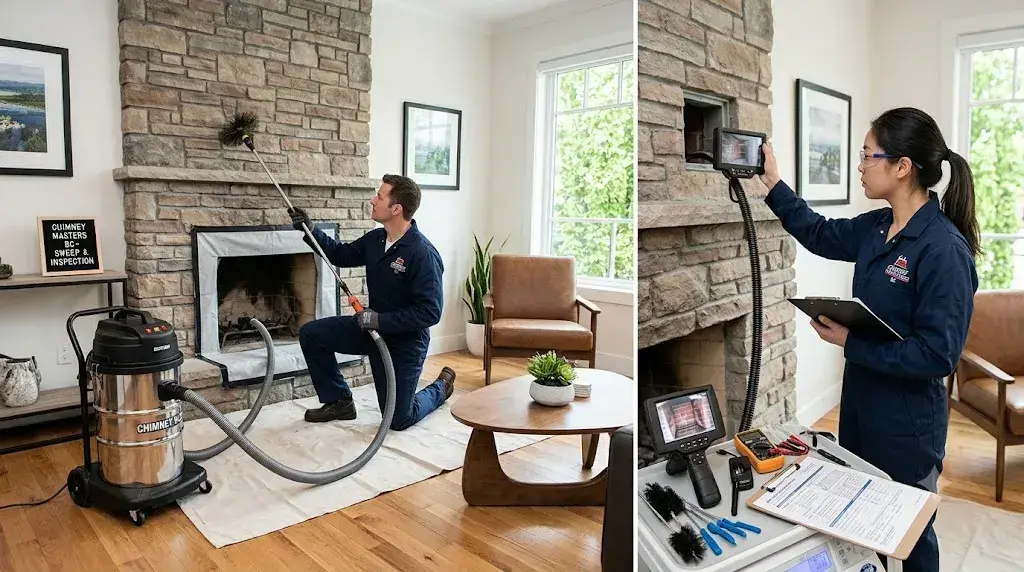
- Protect the room. Drop cloths go down around the fireplace or stove, and a vacuum controls dust.
- Clean the flue. Rods and brushes sized to your flue are worked through the chimney to scrub the walls.
- Clear the smoke chamber and damper area. Soot and debris tend to collect here.
- Remove the debris. Loose deposits are cleaned out of the firebox and vacuumed up.
- Note what came out. Heavy glazed creosote, pieces of liner or mortar, or nesting material are clues that something needs a closer look.
A sweep is maintenance. It keeps the flue clean and the draft working, but it isn’t designed to judge whether the structure is sound. For service details, see our chimney sweeping and cleaning page, and for the warning signs that it’s time, read signs you need a chimney sweep now.
What Does a Chimney Inspection Check?
A chimney inspection evaluates the condition of the whole system, not just the inside of the flue. The inspector is looking for damage, wear and anything that could let water, heat or smoke go where it shouldn’t. A thorough inspection looks at:
- Exterior masonry: cracked or flaking bricks, failing mortar joints and white chalky staining.
- Crown and cap: cracks, a missing cap, or water pooling at the top.
- Flashing: gaps where the chimney meets the roof, a common leak path.
- Flue liner: cracks, gaps or missing sections that a brush will never show.
- Damper and smoke chamber: rust, warping and buildup.
- Firebox and hearth: cracked or missing brick and mortar.
- Connections and clearances: how the appliance connects to the chimney and how close it sits to combustible material.
- Attic and ceilings near the chimney: staining that points to moisture.
The result should be a written assessment of what’s sound, what’s worn and what needs repair, ideally with photos. Our guide to what happens during a chimney inspection walks through the steps, and the pre-winter inspection checklist lists what you can look at from the ground yourself. If you’d like a professional assessment, see our chimney inspection service.
What’s the Difference Between a Chimney Inspection and a Chimney Sweep?
Here is how the two compare at a glance:
| Chimney sweep | Chimney inspection | |
|---|---|---|
| Main purpose | Cleans the chimney | Assesses its condition and safety |
| The question it answers | “Is it clean and venting properly?” | “Is it sound, and is it safe to use?” |
| What it covers | Flue, smoke chamber, firebox and damper area | Masonry, crown, cap, flashing, liner, damper, firebox and connections |
| Typical tools | Brushes, rods and a vacuum | Flashlight, mirrors, ladder and roof access, sometimes a camera |
| What you receive | A clean chimney and notes on what the sweep saw | A written assessment with recommended repairs |
| What it can miss | Hidden damage to the liner or masonry | It won’t remove buildup, so a heavily coated flue may need sweeping first |
| Best timing | Before the heating season, or when deposits build up | Annually, after storms or chimney fires, when buying a home, or when changing fuel or appliance |
| Cost and frequency | See our chimney sweep cost guide and how often to schedule a sweep | See our chimney inspection cost guide |
Think of it as maintenance versus diagnosis. A sweep keeps a healthy chimney working. An inspection finds out whether the chimney is healthy in the first place.
Can a Chimney Sweep Also Inspect Your Chimney?
In part, yes. A good sweep notices damage while cleaning, and many include a quick visual check. But a look during a cleaning isn’t the same as a full inspection. The visit is organized around cleaning, so the roof-level parts, the liner and the attic side of the chimney may not get a proper look.
In British Columbia there is a useful overlap. WETT, the certification body for wood-burning systems in Canada, lists chimney sweeps among its certified professionals, and WETT-certified sweeps can perform visual and technical inspections of wood-burning systems. So the same qualified person may be able to do both jobs. What matters is what the visit includes, so ask for the scope in writing.
A WETT inspection is also a different thing from a general chimney inspection. It evaluates a wood-burning appliance and its system against codes, safety standards and manufacturer instructions. Some insurers may ask for one before covering a wood-burning appliance, so check with yours. For what your policy may cover once a problem is found, see our guide on home insurance and chimney repair. Optional: state whether Red Brick’s technicians hold WETT certification. Leave this out if they do not.
A clean flue is not a safe flue. A freshly swept chimney can still have a cracked liner, failing mortar or a damaged crown. Cleaning removes what’s inside. It doesn’t reveal or repair what’s wrong with the structure.
Do You Need Both? How to Decide
For most homes the answer is yes, at different intervals. Use these lists to decide what to book.
Book a sweep when
- You burn wood regularly and deposits have built up.
- You notice a smoky smell, a weak draft or smoke coming back into the room.
- The heating season is about to start and the chimney hasn’t been cleaned.
Book an inspection when
- You’ve never had the chimney inspected, or can’t remember when you last did.
- You’re buying or selling a home with a fireplace or stove.
- There has been a storm, a chimney fire or an earthquake. After a storm, see our guide to emergency chimney repair.
- You’re changing fuel or adding or replacing an appliance.
- You see leaks, staining, loose bricks or rust. Water stains near the chimney are often not caused by the flue at all, as we explain in why chimneys leak.
Book both together when
- The home or chimney is new to you.
- A long time has passed since either service.
- A sweep has recommended a closer look.
Which should come first? If you’re booking both, ask for them in one visit. Sweeping first clears the soot so the inspector can see the liner and surfaces clearly, which matters most when a camera is used. If you can only do one, choose the inspection when the chimney’s condition is unknown or something has changed, and the sweep when you simply need routine cleaning.
Chimney Inspection Levels, Explained
You may see inspections described by level. The most widely used system, based on the NFPA 211 standard and used by the Chimney Safety Institute of America (CSIA), has three:
| Level | What it involves | When it’s used |
|---|---|---|
| Level 1 | A visual check of the accessible parts of the chimney, flue and connections | Chimneys in regular use with no changes or known problems |
| Level 2 | Adds a closer look at concealed areas, often with a camera | After a change of fuel or appliance, a sale, or an event such as a chimney fire or earthquake |
| Level 3 | Investigates hidden areas, which may mean opening parts of the structure | Only when a serious hazard is suspected |
WETT uses its own terms for wood-burning systems: visual, technical and invasive inspections. Not every company uses these labels, so ask what’s included rather than relying on a level number. Tell readers which terms Red Brick uses and what each visit includes.
How Often Do You Need Each One?
Frequency depends on how much and what you burn, so we cover it in detail in our guide to how often to schedule a chimney sweep. The headline guidance from the standards bodies is this:
- Inspection: NFPA 211 calls for chimneys, fireplaces and vents to be inspected at least once a year. CSIA notes this applies even if the chimney is rarely used, because animal nests or deterioration can make it unsafe.
- Sweeping: it depends on buildup, not the calendar. CSIA advises sweeping a masonry fireplace when sooty buildup reaches about 3 mm (1/8 inch), or sooner if glazed creosote is present.
Why Vancouver Homeowners Shouldn’t Skip the Inspection
A sweep tells you the flue is clean. In the Lower Mainland, the bigger risk to a chimney is often water. Vancouver’s rainy climate keeps masonry wet for much of the year, and a failing crown, flashing or mortar joint can let moisture in long before it affects how the fireplace burns.
Signs that a clean chimney still has a problem include:
- Water stains on a ceiling or wall near the chimney.
- White, chalky staining on the brickwork.
- Crumbling or missing mortar joints. Our chimney mortar repair guide explains what that repair involves.
- Rust on the damper or inside the firebox.
- Gaps or lifting where the chimney meets the roof, which often points to failing chimney flashing.
If you see any of these, don’t wait for the next scheduled sweep. An inspection finds the source before it becomes a bigger repair.
What Happens If an Inspection Finds Damage?
A good inspection ends with a clear list of findings ranked by urgency, not a sales pitch. Most outcomes fall into three groups: monitor it, do a minor repair such as mortar or cap work, or plan larger work such as crown, flashing, relining or a rebuild.
To understand your options and likely costs, see our 2026 chimney repair cost guide and our guide to chimney repair vs. rebuild. If you’re unsure who to call for the work, read who to call for chimney repair.
Questions to Ask Before You Book
- What exactly does the visit include: cleaning, inspection or both?
- Will someone check the roof-level parts (crown, cap and flashing) as well as the flue?
- Do you use a camera, and will I see the photos or footage?
- Will I get a written report with photos?
- Who does the work, and what certifications do they hold? For wood-burning systems, ask about WETT.
- If you find damage, will you explain it before giving me a quote?
For more on choosing a company, read how to choose a chimney sweep.
Chimney Inspection vs. Chimney Sweep FAQ
Is a chimney sweep the same as a chimney inspection?
No. A sweep cleans the chimney by removing soot, creosote and debris. An inspection assesses its condition and safety, checking the masonry, crown, flashing, liner and damper. They are often booked together, but a sweep alone does not tell you whether the chimney is structurally sound.
Does a chimney sweep inspect the chimney?
Partly. A sweep usually notices obvious damage while cleaning, but that is not a full inspection of the roof-level parts, the liner or concealed areas. Some certified sweeps can also carry out visual and technical inspections of wood-burning systems, so ask exactly what your visit includes.
Does a chimney inspection include cleaning?
Usually not. An inspection looks at condition and does not remove buildup. If the flue is heavily coated, the inspector may recommend sweeping first so the surfaces can be seen clearly. Ask whether the company offers a combined visit.
Do I need an inspection if I get my chimney swept?
Yes, periodically. Sweeping removes deposits but does not confirm that the liner, masonry, crown and flashing are sound. NFPA 211 calls for chimneys to be inspected at least once a year, so an annual inspection is the safe default.
Can a chimney sweep find mortar damage or a cracked liner?
A sweep may spot obvious crumbling mortar or pieces of liner in the debris, but small cracks and gaps are easy to miss without a dedicated inspection, often using a camera. Do not rely on a sweep alone to rule out hidden damage.
Which should I book first, a sweep or an inspection?
If you can, book them together: sweep first so the surfaces are clear, then inspect. If you can only do one, choose the inspection when the chimney’s condition is unknown or something has changed, and choose the sweep when you just need routine cleaning.
Do I need either if I rarely use my fireplace?
You still need an inspection. NFPA 211 advises inspecting at least once a year even when a chimney is rarely used, because animal nests or deterioration can make it unsafe. Sweeping is needed less often if you burn little, depending on buildup.
Is a WETT inspection the same as a chimney inspection?
No. A WETT inspection evaluates a wood-burning appliance and its system against codes, safety standards and manufacturer instructions. A general chimney inspection focuses on the condition of the chimney itself. Some insurers and buyers ask for a WETT inspection, so ask which one you need.
Book a Chimney Inspection or Sweep in Vancouver
Not sure which one you need? Tell us what you’ve noticed and we’ll recommend the right visit. Red Brick Chimney Services provides chimney inspections and sweeping across Vancouver, Burnaby, Surrey, Richmond, Coquitlam, New Westminster, Port Moody, Port Coquitlam and North Vancouver. Contact us or call (778) 668-7636. If an inspection finds damage, we also handle the work through our chimney repair services.
Sources
- Chimney Safety Institute of America (CSIA): frequently asked questions (NFPA 211 inspection frequency, sweeping guidance)
- WETT Inc.: About WETT inspections (WETT inspection definition and certified professionals)
- Promutuel Assurance: tips for safe and effective chimney sweeping (creosote and chimney fire risk)