

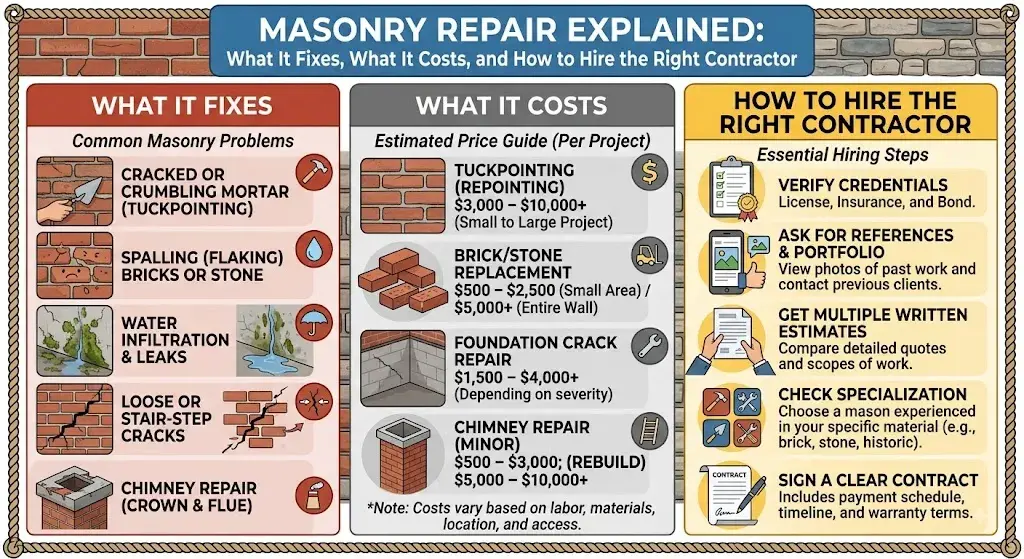
Masonry is one of the most durable building materials there is — brick and stone structures regularly outlast the people who built them. But “durable” doesn’t mean “maintenance-free,” and masonry that’s neglected for too long doesn’t fail gracefully. It fails in ways that are expensive, sometimes structural, and occasionally dangerous.
If you’re staring at a crack in your brick wall, crumbling mortar on your chimney, or a quote from a contractor you’re not sure you trust, this guide covers what you actually need to know: what masonry repair involves, how to tell if you need it, what it costs, and — most importantly — how to hire someone who’ll do it right the first time.
What Is Masonry Repair?
Masonry repair is any work that restores the structural integrity or weatherproofing of brick, stone, block, or concrete construction. That covers a wide range of jobs, from resealing a mortar joint to rebuilding a collapsed wall. Unlike framing or drywall repair, masonry work depends heavily on matching new materials to old — mortar hardness, brick colour, joint profile — which is why it’s treated as a specialized trade rather than general contracting.
Masonry repair typically falls into a few categories:
- Repointing (tuckpointing): removing deteriorated mortar and replacing it with fresh, matched mortar
- Brick and stone replacement: swapping damaged units for matching ones
- Structural repair: correcting bulging, leaning, or cracked walls
- Waterproofing: applying breathable sealants that keep moisture out without trapping it in
- Chimney masonry repair: a specialized subset covering the brick, mortar, crown, and cap of a chimney structure specifically
Common Types of Masonry Repair
Masonry issues show up in different parts of a home, and each has slightly different repair considerations:
- Wall repair — cracked, bulging, or crumbling brick and stone walls, both interior and exterior. See our full masonry services for the complete range of wall and structural repair work.
- Chimney masonry repair — brick, mortar, crown, and flashing issues specific to chimney structures, covered in detail below.
- Foundation masonry repair — cracked or settling masonry foundations, often paired with waterproofing.
- Retaining wall repair — bulging or failing walls, usually tied to drainage problems behind the wall.
- House facing and veneer repair — brick veneer that’s cracking, staining, or separating from the underlying structure. See our house facing page for more detail.
Signs You Need Masonry Repair
Masonry doesn’t fail overnight — it gives warning signs for months or years before a problem becomes serious. Watch for:
- Crumbling or missing mortar between bricks or stones, sometimes visible as gaps you can see through
- White, chalky residue (efflorescence) on the surface, which signals water moving through the material
- Cracks, especially horizontal cracks or stair-step cracks running diagonally across a wall
- Spalling — brick or stone faces flaking, chipping, or crumbling away
- Bulging or leaning sections, which almost always indicate a structural issue rather than a cosmetic one
- Water stains on interior walls or ceilings near masonry structures
A single hairline crack or a small area of worn mortar usually isn’t urgent. Multiple signs together, or anything structural like a lean or bulge, is worth a professional assessment sooner rather than later — small masonry problems get meaningfully more expensive the longer they’re left alone.
Masonry Repair vs. Rebuild
Not every masonry problem requires tearing a structure down and starting over. As a general rule:
- Repair is appropriate when damage is isolated — a section of mortar, a handful of bricks, one wall — and the underlying structure is sound.
- Rebuild becomes necessary when damage is widespread, the structure is leaning or separating, or the cumulative cost of repeated repairs starts to approach what a rebuild would cost.
For chimneys specifically, this decision has its own considerations — see our full breakdown in chimney repair vs. rebuild.
Masonry Chimney Repair: A Special Case
Chimneys deserve their own mention because they combine every masonry risk factor at once: constant weather exposure, height, and a structure that’s directly tied to fire and gas safety. Masonry chimney repair covers the brick, mortar, crown, and cap — while flashing (where the chimney meets the roof) is technically a separate material but is almost always assessed and repaired alongside the masonry, since a failure in one accelerates damage in the other.
Common chimney masonry repairs include:
- Repointing mortar joints damaged by freeze-thaw cycles
- Repairing or replacing a cracked chimney crown
- Masonry chimney cap repair or replacement, to stop water entering from the top
- Masonry flashing repair at the roofline junction
- Brick replacement for spalling or cracked sections
We go into much more depth on chimney-specific signs, process, and permits in our brick chimney repair guide, and our dedicated chimney masonry repairs page covers current pricing and process specifics.
DIY vs. Professional Masonry Repair
Minor cosmetic touch-ups — clearing debris, re-sealing a very small gap — are within reach for a confident homeowner. Beyond that, masonry repair is worth leaving to a professional for two reasons:
Material matching is harder than it looks. Using mortar that’s harder than the surrounding brick or stone is one of the most common DIY mistakes. Mismatched mortar doesn’t flex the same way during freeze-thaw cycles, which means the brick — not the mortar — ends up taking the damage. A repair done incorrectly can accelerate the exact problem it was meant to fix.
Height and structural risk are real. Chimney and upper-wall masonry work often happens at height, and structural repairs need an accurate read on whether a crack is cosmetic or load-bearing. Getting that wrong has real safety and cost consequences.
How Much Does Masonry Repair Cost?
Costs vary significantly by project type and scope. In general, homeowners in the Lower Mainland can expect:
- Minor repointing: $500 – $2,000
- Brick or stone replacement: $25 – $50 per square foot
- Retaining wall repair: $50 – $150 per linear foot
- Foundation masonry repair: $2,000 – $8,000
- Full masonry rebuild: $3,000 – $10,000+
- Chimney-specific masonry repair: $800 – $5,000, depending on damage extent and accessibility
For a full pricing breakdown by project type, see our masonry services and chimney masonry repairs pages, or our chimney repair cost guide for chimney-specific numbers.
How to Hire the Right Masonry Contractor
This is where most homeowners actually get stuck — not identifying that they have a problem, but figuring out who to trust with fixing it. Here’s what separates a qualified masonry contractor from a risky one:
Licensing and safety certification. In BC, any contractor working at height or on structural repairs should carry WorkSafeBC coverage. Ask for their registration number directly — a legitimate contractor will provide it without hesitation.
Masonry-specific experience, not general contracting. Masonry is a distinct trade. A roofer or general handyman may be competent at their own work but lack the material-matching and structural judgment that comes from years of masonry-specific experience. Ask to see a portfolio of comparable projects.
Written, itemized estimates. A reputable contractor inspects before quoting and provides a written estimate breaking down labour and materials separately. Vague verbal quotes, or quotes given without an in-person inspection, are a red flag.
Insurance and bonding. Confirm liability insurance is current — if an accident happens on your property and the contractor isn’t insured, you could be financially responsible.
References and reviews. Check Google reviews, HomeStars, and BBB ratings. For any job over $1,000, get at least two or three quotes before committing — pricing and approach can vary more than you’d expect between contractors.
A warranty on the work. Quality masonry repair should come with a written warranty. Ask specifically what’s covered and for how long.
Material sourcing and matching ability. Ask how they’ll match brick colour, mortar hardness, and joint profile to your existing structure — this is the detail that separates a repair that blends in from one that looks patched.
Questions to Ask Before You Hire
- Are you WorkSafeBC registered, and can I see your registration number?
- Can I see photos or references from masonry projects similar to mine?
- Will you inspect in person before providing a written estimate?
- How will you match the mortar and brick to my existing structure?
- What’s included in your warranty, and for how long?
- Who handles permits, if my project requires one?
- What’s your plan for site cleanup during and after the work?
Red Flags to Avoid
- Quotes given without an in-person inspection
- Pressure to sign immediately or “today-only” pricing
- No willingness to provide references or licensing information
- Unusually low bids compared to other quotes — often a sign of corner-cutting on materials or labour
- No written contract or estimate
Frequently Asked Questions
What’s the difference between masonry repair and masonry restoration?
Repair addresses specific damaged areas — a cracked section, failing mortar joints. Restoration is typically broader, aiming to return an entire structure (often a heritage building) to its original appearance and condition using period-appropriate materials and techniques.
How do I find a reputable masonry contractor near me?
Start with Google reviews, HomeStars, and BBB listings, and prioritize contractors with masonry-specific (not just general contracting) experience. Get at least two written estimates for anything over $1,000, and confirm WorkSafeBC registration and insurance before signing anything.
Is masonry repair covered by home insurance?
It depends on the cause. Sudden damage from a storm or accident is more likely to be covered than gradual deterioration from age or weather, which most insurers treat as a maintenance issue. Check your specific policy wording.
How long does masonry repair last?
Quality repointing typically lasts 25-30 years in a coastal climate. Work done with mismatched or low-quality mortar can fail within a few years, which is part of why contractor selection matters as much as the repair itself.
Can masonry repair be done in winter?
It’s possible, but spring through fall provides better curing conditions for mortar. Reputable contractors will explain any seasonal limitations for your specific project rather than rushing work in poor conditions.
Whether you’re dealing with a cracked wall, a chimney that needs repointing, or you’re simply trying to find a masonry contractor you can trust, the right starting point is the same: a professional inspection and an honest answer about what you actually need. We provide rapid-response masonry repair across Metro Vancouver, including Burnaby, Surrey, Richmond, New Westminster, Port Moody, Port Coquitlam, and Vancouver. Get in touch for a free assessment, or explore our full masonry services to see the complete range of work we handle.