

A crack in the back wall of your fireplace is easy to ignore, until smoke starts drifting into the room. Fireplace repair is almost always simpler and cheaper when you catch damage early, and the firebox is where most of it begins. The firebox is the inner chamber where the fire burns.
This guide shows the signs of firebox damage to look for, explains when it is safe to keep using your fireplace and when it is not, and gives realistic cost ranges. If you live in Vancouver or nearby, the wet coastal climate adds a few extra risks, which we point out along the way.
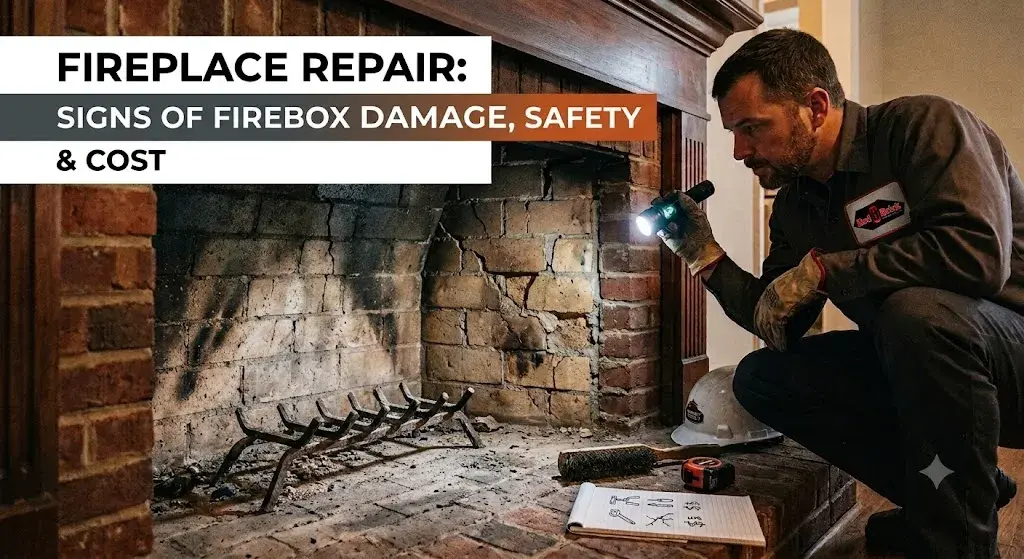
What Is a Firebox, and Why Does Damage There Matter?
The firebox is the chamber at the base of a masonry fireplace where wood burns. It is lined with firebrick, a dense, heat-resistant brick laid with thin joints of refractory mortar. That lining takes the full heat of every fire so the structure around it does not have to.
When the lining cracks or its joints open up, heat and sparks can reach the masonry and framing behind it, and smoke can leak into spaces it should never enter. That is why firebox problems deserve more attention than a cosmetic crack on the outside of the chimney.
Signs of Firebox Damage
Most firebox damage is visible with a flashlight and a few minutes. Wait until the fireplace is completely cold, clear out the ash, and check for these seven signs.
1. Cracked or missing firebrick
Hairline cracks are common after years of heating and cooling. Wide cracks, cracks you can see through, and bricks that are loose, shifting or missing are different. They expose the structure behind the lining. Inspectors following the Chimney Safety Institute of America (CSIA) procedure look specifically for cracked firebrick and loose brick inside the firebox.
2. Crumbling or missing mortar joints
Mortar holds the firebrick together. If it is powdery, falls out when touched, or has left visible gaps, hot gases can slip behind the bricks. Open joints are one of the first things an inspector flags. For joints elsewhere in the chimney, see our chimney mortar repair guide.
3. A gap between the firebox and the hearth
Look along the line where the firebox meets the hearth and around the edges of the opening. A separation there can let smoke and sparks escape, and smoke staining on the wall or ceiling above the opening is a common clue that something is leaking.
4. Smoke stains or smoke in the room
Smoke entering the room can come from a blocked flue, poor draft or a damaged firebox, and you cannot tell which by looking. If it is new, stop using the fireplace and have it checked. Make sure your carbon monoxide alarm works before the next fire.
5. Rust or warped metal
Rust, warping, or a damper that no longer closes properly points to heat damage or moisture. In Metro Vancouver, rainwater running down the flue is a frequent cause. Our post on how Vancouver’s rainy climate damages chimneys faster explains why.
6. Flaking or spalling brick
Brick faces that peel or flake away usually mean moisture has repeatedly soaked into the masonry, or that the brick has been overheated. Water getting in from above is a common root cause, so a firebox repair often needs a look at the chimney top as well.
7. Damp stains or a musty smell near the fireplace
Water marks on the wall beside the fireplace, or a musty smell when the fireplace is cold, often mean a leak higher up. Failing flashing is a common culprit, and our guide to chimney flashing repair and roof leak signs shows what to look for.
Is It Safe to Use a Fireplace With a Damaged Firebox?
It depends on the damage, but you should not burn a fire while the firebox has missing bricks, open mortar joints, a visible gap behind the lining, or any sign of smoke entering the room. Hairline cracks may be monitored, but only a qualified inspection can confirm they are safe.
Treat the lists below as a starting point, not a diagnosis. Damage inside a firebox can look minor while hiding a bigger problem behind it, so when in doubt, do not light it.
Usually fine to monitor, with an inspection every year:
- Fine hairline cracks in firebrick that are not widening
- Light soot and surface discolouration
- Minor surface wear on bricks that are still firmly in place
Stop using the fireplace until it has been inspected:
- Missing, loose or shifting firebrick
- Open or crumbling mortar joints
- A visible gap where the firebox meets the hearth
- Smoke or a burning smell in the room while the fire is lit
- Any damage after a chimney fire, a major storm or an earthquake
- Cracks in the flue liner, which can let heat reach the framing behind the chimney
A CSIA Level 1 inspection covers the readily accessible parts of the fireplace and chimney. A Level 2 adds a camera scan of the flue, and it is the usual step after a chimney fire or another event that may have caused damage. Our chimney inspections page explains what is checked, and chimney sweeping and cleaning removes the soot and creosote that can hide damage. The National Fire Protection Association (NFPA) recommends an annual inspection by a qualified professional.
How Much Does Fireplace Repair Cost?
Most fireplace repairs fall between roughly $180 and $1,000 in published national averages, with a typical job near $600. Fixing a masonry firebox usually runs $150 to $1,000, while rebuilding a brick or stone firebox can reach about $2,500. Your quote depends on the damage found.
| Job | Typical range (USD, national averages) |
| Level 1 chimney inspection | $90 to $250 |
| Level 2 inspection with camera scan | $100 to $500 |
| Firebox repair | $150 to $1,000 |
| Rebuild of a brick or stone firebox | Up to about $2,500 |
| Overall fireplace repair average | About $600 |
These figures come from published US cost guides, so treat them as a rough scale rather than a Vancouver price. A written quote after an in-person look is the only reliable number.
What moves the price up or down:
- Extent of damage: a few replaced bricks and some new joints cost far less than a rebuilt chamber.
- Access: tight or elevated fireboxes take longer to work in.
- Hidden problems: damage behind the lining, a failing damper or a leaking chimney top can add work.
- Inspection first: paying for a fireplace inspection cost up front stops you paying twice for guesswork.
For the bigger picture on the chimney above the roof, see our chimney repair cost guide for Vancouver. Wondering about coverage? Whether a claim is accepted depends on your policy and the cause of damage, and our post on whether home insurance covers chimney repair explains the usual questions.
Fireplace Repair or Rebuild: Which Do You Need?
Repair makes sense when the damage is limited: a handful of cracked or loose bricks, open mortar joints, or a small gap at the hearth. A rebuild is the better choice when damage is widespread, bricks keep shifting, or the structure behind the lining has been compromised.
The same logic applies to the chimney above the firebox. Our post on chimney repair vs rebuild walks through how masons decide. If your firebox needs work, our firebox repairs and rebuilds service covers both routes.
How a Mason Repairs a Damaged Firebox
The exact steps depend on what the inspection finds, but a typical masonry firebox repair follows this order:
- Inspect and document. The mason checks the firebrick, joints, hearth junction and damper, and photographs the damage.
- Remove what has failed. Loose or cracked firebrick and crumbling mortar are cut out back to solid material.
- Rebuild with the right materials. New firebrick is set in refractory mortar, which is made for firebox heat. Ordinary mortar is not.
- Check the surrounding parts. The hearth junction, damper and smoke chamber are checked so the repair does not leave a weak point.
- Cure before the first fire. The new mortar needs to set and dry as its manufacturer directs before you light a fire.
How to Prevent Firebox Damage
- Schedule a sweep and inspection every year, and read our guide on how often you should schedule a chimney sweep to find the right rhythm for your use.
- Burn only dry, seasoned firewood, and never burn rubbish or treated wood.
- Keep the fire sized to the fireplace. The CSIA advises that a metal grate should be no more than two-thirds the size of the opening.
- Fix leaks at the chimney top quickly so water does not work its way down into the firebox.
Fireplace Repair FAQ
Can I repair a cracked firebox myself?
Hairline cosmetic cracks are one thing, but structural firebox repair needs refractory materials and a proper inspection. The wrong mortar or an unseen gap behind the lining can fail under heat, so we recommend a qualified mason for anything beyond surface cracks.
How often should a fireplace be inspected?
At least once a year if you use it, which matches NFPA advice. Inspect it sooner after a chimney fire, a storm, an earthquake, or any time you notice smoke, staining or loose brick.
What is the difference between firebox repair and chimney repair?
The firebox is the chamber inside your home where the fire burns. The chimney is the structure that carries smoke up and out. Damage can affect one or both, which is why an inspection checks the whole system.
How long does a fireplace repair take?
It depends on the scope. A few replaced bricks is a smaller job than a rebuild, and your written quote should include a timeline. Our guide on how long chimney repair takes covers what affects it.
Get Your Fireplace Checked Before the Next Fire
If you have spotted cracked firebrick, open joints, smoke staining or a smoky smell, stop using the fireplace and get it assessed. Early fireplace repair protects your home and usually costs less than waiting. Read about our firebox repairs and rebuilds, or contact Red Brick Masonry to book an inspection and get a written quote.