

Water showing up near a chimney is one of the most confusing leaks a homeowner can deal with — not because it’s rare, but because the water you see is almost never where the water got in. A stain on the ceiling three feet from the chimney might trace back to the crown at the very top of the stack, or it might have nothing to do with the chimney at all and be coming from worn shingles somewhere else on the roof.
Before you can fix a leak around your chimney, you need to know which of three things you’re actually dealing with: a problem with the chimney structure itself, a failure at the flashing where the chimney meets the roof, or a broader roof issue that just happens to show up near the chimney. This guide walks through how to tell them apart, what to do in the meantime, and where to go next once you know.
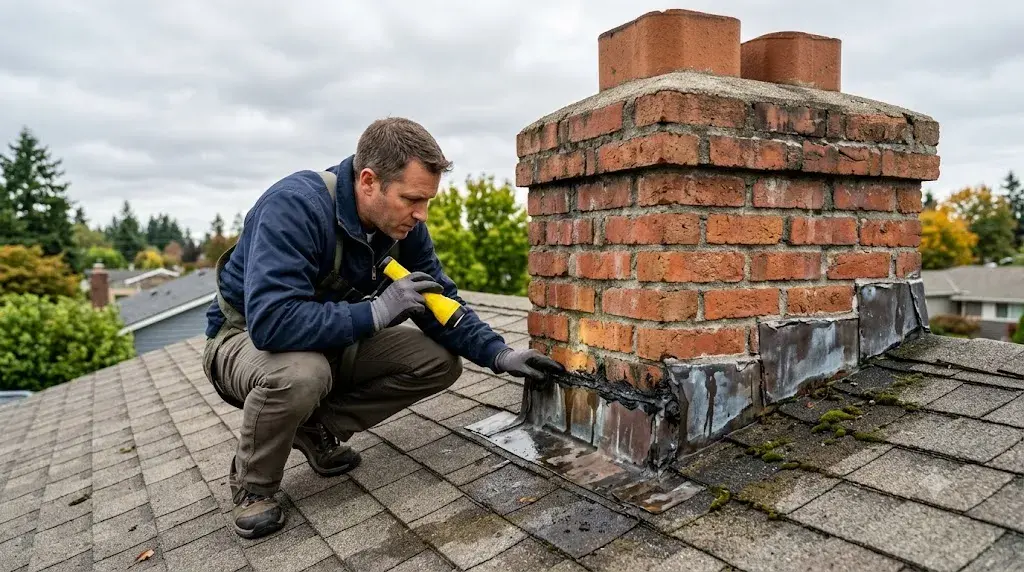
Quick Answer: Three Possible Sources
- The chimney itself — a damaged cap, cracked crown, spalling brick, or deteriorated mortar letting water directly into the structure. See our full guide to chimney leak causes for the complete breakdown of all eight causes and repair costs.
- The flashing — the metal seal where the chimney meets the roof, which is a separate material and a separate repair from the chimney itself. Covered in depth in our chimney flashing repair guide.
- The wider roof — aging shingles, a failed vent boot, or a valley leak elsewhere that happens to show up on a ceiling near the chimney. See our roof repair services or our broader roof flashing guide if the issue isn’t chimney-related at all.
The rest of this guide walks through how to tell which one you’re actually dealing with.
Step 1: Check the Attic Before You Check Anything Else
If you have attic access, this is the single most useful thing you can do before calling anyone. Water travels along framing members and insulation before it shows up as a ceiling stain, so tracing it at the source — where it’s actually entering — tells you far more than where it eventually appears downstairs.
Look specifically at:
- The area immediately around the chimney chase or masonry where it passes through the attic
- The roof decking near the chimney for dark staining, soft spots, or active dripping
- Whether moisture is concentrated tightly around the chimney (suggesting chimney or flashing) or spread more broadly (suggesting a wider roof issue)
If you can see daylight or active water entry right at the chimney-to-roof junction, that points strongly toward flashing. If the masonry itself looks damp with no clear point of entry nearby, that points toward the chimney structure — a cracked crown or spalling brick letting water soak through the material itself rather than entering at a single seam.
Step 2: Pay Attention to When the Leak Happens
Timing tells you a lot:
- Leaks that appear with every rain, regardless of wind direction — usually point to a chimney or flashing issue, since these are direct entry points that don’t depend on wind-driven rain finding a gap.
- Leaks that only appear during wind-driven rain, especially from one direction — more often point to a roofing issue elsewhere, since wind-driven rain can find its way under shingles or around vents that a straight downpour wouldn’t reach.
- Leaks that appear even during dry weather — this is unusual enough to point toward condensation inside the flue rather than an external leak at all, which is a different (and often overlooked) cause covered in our chimney leak causes guide.
- A leak that started suddenly after a storm — worth treating as urgent; see our guide on emergency chimney repair after a storm for what to do right away.
Step 3: Do a Visual Check From the Ground
You don’t need to get on the roof to gather useful information. From the ground, with binoculars if needed, look at:
- The cap — is it present, sitting straight, and free of visible rust or damage?
- The crown — can you see cracks in the mortar slab at the top of the chimney?
- The flashing — does the metal at the roofline look intact, or is there visible separation, rust, or lifted edges?
- The brick and mortar — are there visible cracks, crumbling mortar joints, or bricks that look chalky or flaking (spalling)?
- The surrounding roof — are shingles elsewhere on the roof clearly aged, curling, or missing granules? If the whole roof looks worn, the chimney may just be an innocent bystander.
Is It the Chimney Itself?
If your inspection points to the chimney structure — a damaged cap, cracked crown, spalling brick, deteriorating mortar, condensation inside the flue, or a damaged flue liner — you’re dealing with one of the most common categories of chimney leak. Rather than repeat that ground here, our complete guide to chimney leak causes and repair costs covers all eight causes in detail, including what each one costs to fix and which ones are safe to attempt yourself.
Is It the Flashing?
If the water is entering specifically at the roofline, where the chimney meets the roof, you’re likely dealing with a flashing failure rather than a chimney structure problem. This is a genuinely different repair — flashing is a separate material system, and treating a flashing leak like a chimney leak (or vice versa) means fixing the wrong thing. Our chimney flashing repair guide covers the signs, causes, and repair process specific to flashing.
Is It the Wider Roof?
Sometimes a leak that appears to be “around the chimney” is really just roof damage that happens to be located near it — a failed vent boot a few feet away, a valley leak, or generally worn shingles letting water travel under the surface before it shows up near the chimney’s ceiling penetration. If your visual inspection shows broader roof wear rather than anything specific to the chimney or its flashing, see our roof repair services or our guide to roof flashing repair for non-chimney flashing types like valleys and vent pipes.
What to Do While You Wait for a Repair
Water damage compounds the longer it’s left unaddressed, so if you’ve spotted an active leak and can’t get a repair scheduled immediately:
- Stop using the fireplace if the leak is anywhere near the flue, since moisture and combustion don’t mix safely
- Place a container to catch active dripping and check it regularly to prevent overflow onto flooring
- Move any items away from the affected area, including furniture, electronics, and stored belongings
- Avoid DIY roof tarping in wet or icy conditions — a fall risk isn’t worth a temporary fix; call for emergency service instead if the leak is significant
- Take photos of visible damage now, both for your own records and in case you need to document the timeline for an insurance claim
What a Professional Diagnosis Actually Involves
If your own inspection doesn’t give you a clear answer — which is common, since many leak sources aren’t visible without getting on the roof — a professional chimney inspection is the fastest way to get a definitive answer. This typically includes a camera inspection of the flue interior, a close visual check of the cap, crown, and flashing, and sometimes a controlled water test to trace exactly where water is entering. A proper diagnosis before repair work begins saves you from paying to fix the wrong thing.
How Much Does Chimney Leak Repair Cost?
Cost depends entirely on which of the three sources you’re dealing with — a cap replacement runs $150–$500, while a full crown rebuild or flashing replacement can run into the thousands. Rather than repeat the full pricing breakdown here, see our chimney leak causes and cost guide for a complete cost table by cause, or our chimney repair cost guide for broader chimney repair pricing.
Finding Chimney Leak Repair Near You
If you’re searching for “chimney leak repair near me,” a few things separate a contractor who’ll actually find the source from one who’ll guess:
- They inspect before quoting. A contractor willing to quote a repair without seeing the leak in person, or without a camera inspection when the source isn’t obvious, is a red flag.
- They distinguish between chimney, flashing, and roofing work. A qualified contractor should be able to tell you specifically which of the three categories your leak falls into, not just “we’ll seal it.”
- They’re WorkSafeBC registered, since this work happens at height.
- They provide a written estimate that separates diagnosis, repair scope, and any related roofing work.
- They serve your specific area. We provide rapid-response chimney leak diagnosis and repair across Metro Vancouver, including Burnaby, Surrey, Richmond, New Westminster, Port Moody, and Port Coquitlam.
Frequently Asked Questions
Why is my ceiling leaking near the chimney but not directly under it?
Water travels along framing, insulation, and roof decking before it shows up as a visible stain, so the entry point is often several feet from where the damage appears. Tracing it requires an attic inspection or a professional camera inspection rather than assuming the leak is directly above the stain.
Is a leak around the chimney always a chimney problem?
No. It’s common for a genuine roofing issue — worn shingles, a failed vent boot, or a valley leak — to show up on a ceiling near the chimney simply because of how water travels, without the chimney itself being damaged at all.
How urgent is a leak around my chimney?
Treat it as time-sensitive rather than an emergency in most cases — water damage compounds the longer it’s left, but a day or two to schedule a proper inspection is generally fine unless water is actively pouring in or you’re seeing signs of structural movement.
Can I temporarily seal a leak around my chimney myself?
Minor, accessible fixes like a chimney cap replacement are reasonable for a comfortable DIYer. Anything involving flashing, the crown, or working at height on a wet roof should wait for a professional rather than risk a fall or a repair that fails within the season.
How much does it cost to diagnose where a chimney leak is coming from?
A professional inspection, often including a camera scan of the flue, typically costs $120–$500 depending on scope. This is usually credited toward the repair cost if you proceed with the same contractor.
If you can’t pin down where your leak is coming from, don’t guess — a proper diagnosis is the fastest way to stop paying for the wrong repair. Get in touch for a free inspection, and we’ll tell you honestly whether you’re dealing with a chimney, flashing, or roofing problem before any work begins.