

If your chimney is missing a cap, or the one you have is rusted, bent, or falling apart, water, animals, and debris have a direct line into your flue. Here’s the quick answer, then the full breakdown.
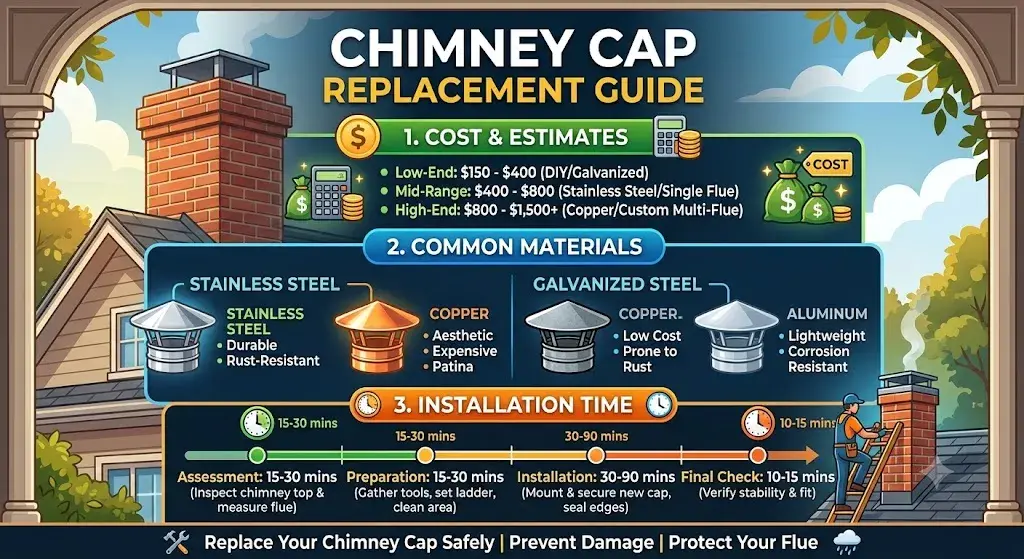
Quick answer: Chimney cap replacement typically costs $200–$650 for a standard single-flue cap and $800–$2,000+ for custom or multi-flue caps, depending on material. Galvanized steel is the cheapest but shortest-lived (5–10 years); stainless steel offers the best value for wet climates (20+ years); copper costs the most but can last 30+ years. Most single-flue installs are done in 1–2 hours; multi-flue or custom jobs take half a day to a full day.
What a Chimney Cap Actually Does
A chimney cap is the metal cover fitted over the top of your flue. It’s a small part, but it does a lot of the work protecting the rest of your chimney: it keeps rain and snow out, stops birds, squirrels, and raccoons from nesting inside, blocks leaves and debris from clogging the flue, and acts as a spark arrestor to stop embers from escaping onto your roof. It’s the cheapest insurance you can buy against much more expensive chimney repair down the road — most water damage, liner deterioration, and animal-related blockages trace straight back to a missing or failed cap.
Signs You Need a Chimney Cap Replacement
Not every cap issue means a full replacement — sometimes a reseal or minor fix is enough. Replace the cap if you notice:
- Visible rust or corrosion on a galvanized steel cap, especially after a few wet seasons
- Bent, dented, or missing mesh screening — this is what keeps animals and sparks out
- Water stains inside the firebox or on the ceiling near the chimney, which usually means the cap (or flashing) is failing
- Scratching, chirping, or nesting sounds coming from the flue
- No cap at all — common on older homes that were never fitted with one
- A cap that’s visibly loose or crooked after a storm or high winds
If you’re not sure which category you’re in, a chimney inspection will tell you definitively whether you need a repair, a reseal, or a full cap replacement.
Chimney Cap Replacement Cost by Material
Material is the single biggest factor in what you’ll pay — both for the cap itself and for how often you’ll need to replace it again.
| Material | Cap Cost (Prefab) | Installed Cost | Typical Lifespan |
| Galvanized Steel | $15–$200 | $200–$400 | 5–10 years |
| Stainless Steel | $50–$500 | $300–$650 | 20–30+ years |
| Aluminum | $30–$150 | $200–$400 | 10–15 years |
| Copper | $150–$900 | $600–$2,000+ | 30+ years |
Custom-fabricated and multi-flue caps run higher than any single-flue price above — expect $800–$2,000+ depending on how many flues need covering and the complexity of your roofline.
Which Material Makes Sense for Vancouver’s Climate?
In a coastal climate with heavy year-round rain and repeated freeze-thaw cycles, galvanized steel’s low upfront cost is misleading — it’s the material most likely to rust through and need replacing again within a decade. Stainless steel is generally the best value here: it resists corrosion, holds up to constant moisture, and rarely needs replacing more than once in a homeowner’s tenure. Copper costs more upfront but is essentially maintenance-free for 30+ years and develops a protective patina rather than rusting, which is why it’s common on heritage and character homes across the Lower Mainland.
How Long Does Chimney Cap Installation Take?
Installation time depends mostly on flue count and accessibility, not the cap material itself:
- Standard single-flue cap: 1–2 hours, usually completed in one visit
- Multi-flue custom cap: Half a day, since it requires precise measurement and fabrication
- Decorative chimney pot installation: Half a day to a full day, especially on heritage homes
- Complex installations requiring masonry work (if the crown or flashing also needs attention): 1–2 days
A typical install follows five steps: assessment and measurement, material selection, removal of the old or damaged cap, mounting and sealing the new one, and a final inspection to confirm draft and watertightness. Steep rooflines, multiple flues, or chimneys that also need crown or flashing work will push jobs toward the longer end of that range.
Chimney Cap vs. Chimney Pot: Don’t Confuse the Two
These terms get used interchangeably, but they’re different things:
- Chimney caps are functional metal covers — their job is protection, not looks.
- Chimney pots are decorative terracotta, clay, or metal extensions, common on heritage homes, that add architectural character and can improve draft. A pot still needs a cap fitted to its opening for full protection.
If you’re dealing with a heritage or character home, our chimney pots & rain caps page covers pot styles and pricing in more detail.
Single-Flue vs. Multi-Flue Caps
If your home has more than one flue (common with a fireplace plus a furnace or water heater vent), you have two options: install a separate cap on each flue, or fit one custom multi-flue cap that covers all openings under a single unit. Multi-flue caps cost more upfront but often work out cheaper than multiple individual caps, and they give a cleaner, more finished look from the street.
DIY vs. Professional Installation
A basic prefab cap and a ladder might make this look like a weekend project, but there are real reasons most homeowners don’t DIY it:
- Roof access and fall risk — chimney work happens at height, often on steep or wet rooflines
- Correct sizing — an ill-fitting cap won’t seal properly and can restrict draft, causing smoke backup
- Flashing and seal quality — a poorly sealed cap can let in exactly the water damage you were trying to prevent
- Multi-flue and custom work — these require fabrication that isn’t available off-the-shelf
For a straightforward single-flue swap on an easily accessible roof, a confident DIYer can manage it. For anything involving height, multiple flues, or a heritage chimney, professional installation protects both the chimney and the person on the ladder.
What Happens If You Skip Replacement?
Delaying a damaged or missing cap doesn’t just risk water intrusion — it compounds into bigger problems: spalling brick from repeated freeze-thaw cycles, a deteriorating chimney crown, animal nests blocking the flue and creating fire hazards, and in some cases carbon monoxide risks from restricted airflow. A cap that costs a few hundred dollars now is almost always cheaper than the chimney reconstruction needed after years of unprotected water damage.
Frequently Asked Questions
How much does chimney cap replacement cost?
Chimney cap replacement costs $200–$650 for a standard single-flue cap and $800–$2,000+ for custom or multi-flue caps, depending on material and chimney access.
What is the best material for a chimney cap?
Stainless steel offers the best balance of cost and durability for wet, coastal climates, lasting 20–30+ years. Copper lasts longest (30+ years) but costs more upfront. Galvanized steel is the cheapest option but typically needs replacing within 5–10 years.
How long does it take to install a chimney cap?
A standard single-flue cap installation takes 1–2 hours. Multi-flue or custom caps typically take half a day, and jobs that also involve crown or flashing repair can take 1–2 days.
How often should a chimney cap be replaced?
Galvanized steel caps typically need replacing every 5–10 years, aluminum every 10–15 years, and stainless steel or copper caps can last 20–30+ years with proper installation.
Can I install a chimney cap myself?
A basic single-flue cap on an easily accessible roof can be a DIY project for confident homeowners. Multi-flue caps, heritage chimneys, and steep or hard-to-access rooflines are best left to a professional to ensure proper sizing, sealing, and safety.
Do I need a cap if I don’t use my fireplace?
Yes. An unused chimney still needs protection from rainwater, animal entry, and debris buildup — water damage doesn’t care whether the fireplace is in use.
Ready to protect your chimney? Get a free chimney cap assessment from our team, serving Vancouver, Burnaby, Richmond, Surrey, and the wider Lower Mainland since 2013.