

Not all masonry cracks are created equal, and the cost of fixing them reflects that — a hairline crack in a mortar joint might cost a few hundred dollars to seal, while a bulging foundation wall can run into the tens of thousands once structural stabilization is involved. The tricky part is that both can look similarly alarming to a homeowner staring at a crack in their brick.
This guide breaks down what masonry repair actually costs across the full range — from cosmetic patching to genuine structural work — and just as importantly, how to tell which category your situation falls into before you call anyone.
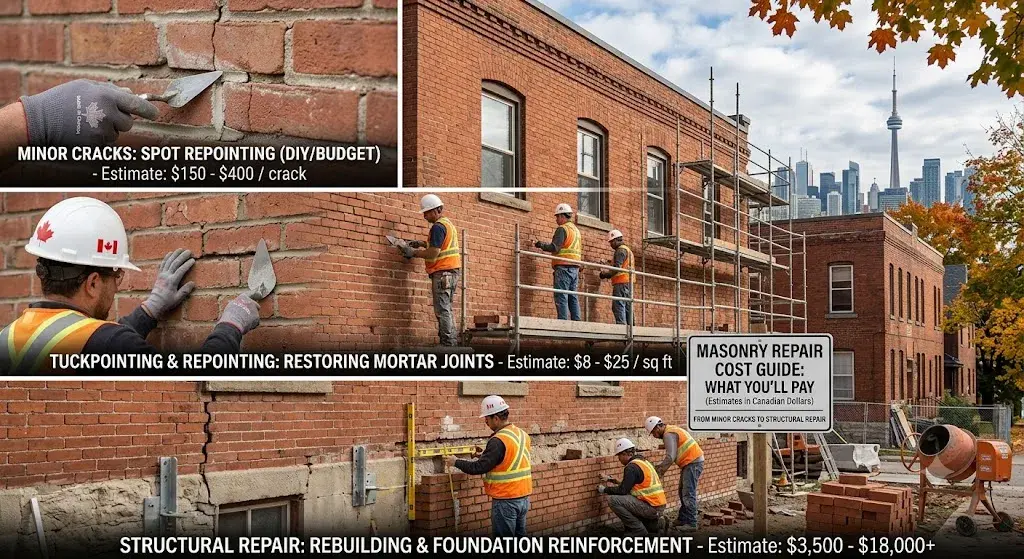
Cosmetic vs. Structural: How to Tell the Difference
Most masonry cracking is cosmetic — surface-level damage from weathering, age, or minor settling that doesn’t threaten the structure’s integrity. Structural damage is different: it indicates the wall, foundation, or bearing structure itself is moving, failing, or no longer supporting load the way it should.
Likely cosmetic if:
- Cracks are hairline to about 1/8 inch
- Cracks run vertically and are consistent in width top to bottom
- The wall or structure is otherwise plumb and stable
- Damage is limited to mortar joints, not the masonry units themselves
Likely structural if:
- Cracks are wider than 1/4 inch, especially if they’re widening over time
- Cracks run horizontally or in a stair-step pattern diagonally across the wall
- The wall is visibly bulging, leaning, or bowing
- Doors and windows nearby have started sticking or misaligning
- Cracks appear on both interior and exterior surfaces at the same location
If you’re seeing signs from the structural list, this is the point to bring in a structural engineer for an assessment before any repair begins — not just a masonry contractor. A reputable masonry repair specialist will tell you directly when a project is beyond cosmetic repair and needs engineering input first.
How Much Does Masonry Repair Cost?
Pricing varies enormously by repair type and whether the issue is cosmetic or structural. Here’s a realistic breakdown:
| Repair Type | Typical Cost (CAD) |
| Minor crack sealing (epoxy/polyurethane injection) | $250 – $800 |
| Repointing / tuckpointing | $500 – $2,000 |
| Brick or stone replacement | $25 – $50 per sq ft |
| Retaining wall repair | $50 – $150 per linear ft |
| Foundation masonry repair (non-structural) | $2,000 – $8,000 |
| Wall bracing / stabilization (steel or carbon fiber) | $3,000 – $8,000 per section |
| Full masonry wall rebuild | $3,000 – $10,000+ |
| Chimney-specific masonry repair | $800 – $5,000 |
| Structural underpinning (helical piers, specialist referral) | $2,000 – $4,000 per pier; $7,000 – $30,000+ total project |
The bottom two rows are where cost climbs fastest — full rebuilds and structural underpinning both involve significantly more labour, engineering, and sometimes permits than surface-level repair. For chimney-specific pricing in more depth, see our chimney repair cost guide.
What Affects Masonry Repair Pricing
Extent of damage. A single cracked mortar joint costs far less than repointing an entire wall face — pricing scales with how much surface area needs work.
Structural vs. cosmetic. This is the single biggest cost driver. Cosmetic repair is a masonry contractor’s job start to finish. Structural repair typically requires a geotechnical or structural engineer’s assessment first, which adds $1,000–$5,000 before repair work even begins, but is not optional when structural movement is suspected.
Accessibility. Repairs on upper walls, chimneys, or areas requiring scaffolding cost more in labour than ground-level work.
Material matching. Matching mortar hardness and brick or stone colour to a structure’s existing materials — especially on older or heritage buildings — takes more skill and time than a straightforward patch.
Permits and engineering. Structural work, and sometimes significant cosmetic rebuilds, may require a municipal permit. Your contractor should confirm this and factor it into your estimate rather than surprise you later.
Underlying cause. If poor drainage or soil movement is causing the damage, addressing that root cause (regrading, drainage correction) adds cost but prevents the same problem recurring after repair.
Structural Masonry Repair: What It Actually Involves
Structural masonry repair covers work that restores a wall or structure’s ability to bear load safely, not just its appearance. This is a different scope of work than cosmetic repair, and it typically follows a specific sequence:
- Engineering assessment. A structural or geotechnical engineer evaluates the cause and severity of movement, and specifies what stabilization method is needed.
- Stabilization. Depending on the engineer’s findings, this might mean steel or carbon fiber wall bracing, wall anchors, or in more severe foundation-related cases, helical pier underpinning — a specialized service usually requiring a foundation-focused contractor working alongside the masonry team.
- Rebuild of affected sections. Once the structure is stabilized, damaged masonry above or around the stabilized area is repaired or rebuilt to match the original.
- Waterproofing and drainage correction. Since water and drainage issues are frequently what caused the structural movement in the first place, addressing that is part of a proper structural repair, not an optional add-on.
If you’re working with a structural masonry repair contractor, confirm they either have in-house engineering partnerships or will coordinate directly with a structural engineer — a masonry contractor operating without engineering input on a genuinely structural issue is a red flag, not a cost-saving shortcut.
Chimney Masonry Repair: A Related but Distinct Category
Chimneys are masonry structures too, but they come with their own considerations — height, flue safety, and constant weather exposure — that general wall or foundation masonry doesn’t share. If your masonry concern is specifically chimney-related, our masonry repair and hiring guide covers chimney masonry repair in more depth, and our chimney masonry repairs page covers current pricing and process specifics.
Repair vs. Restoration
These terms get used interchangeably, but they’re not quite the same. Repair addresses specific damaged sections. Restoration is typically broader in scope, aiming to return an entire structure — often a heritage building — to its original appearance using period-appropriate materials and techniques, which usually costs more due to the specialized materials and craftsmanship involved. We cover this distinction in more detail in our masonry hiring guide.
Finding a Masonry Repair Contractor for Structural Work
Not every masonry repair company is equipped to handle structural work. Beyond the general hiring checklist we cover in our full guide to hiring a masonry contractor, structural jobs specifically call for:
- Willingness to recommend or coordinate with a structural engineer, rather than proceeding without one
- A written scope that clearly separates engineering, stabilization, and cosmetic rebuild costs
- Experience with your specific structure type — foundation walls, retaining walls, and chimneys all call for different expertise
- A realistic timeline, since structural work often can’t be rushed without compromising the fix
Masonry Repair Across Metro Vancouver
Pricing and repair approach are generally consistent across Metro Vancouver, including Burnaby, Surrey, Richmond, New Westminster, Port Moody, and Port Coquitlam — the main variables are the extent of damage and whether structural engineering is required, not location. Older housing stock in any of these cities tends to see more repointing and structural assessment work, simply due to age and decades of freeze-thaw exposure.
Frequently Asked Questions
How much does masonry repair cost on average?
Costs range from $250 for minor crack sealing to $10,000+ for a full structural rebuild. Most cosmetic repairs — repointing, brick replacement, minor crack sealing — fall between $500 and $3,000. Structural work involving engineering and stabilization typically starts around $3,000 and can exceed $30,000 for severe foundation cases.
How do I know if my masonry crack is structural?
Cracks wider than 1/4 inch, horizontal or stair-step cracks, visible wall bulging or leaning, and sticking doors or windows nearby are all signs of structural movement rather than cosmetic weathering. When in doubt, a professional assessment is worth the cost before any repair begins.
Do I need a structural engineer for masonry repair?
Only if the damage shows signs of structural movement rather than surface weathering. A reputable masonry repair contractor will tell you directly when a project needs engineering input rather than proceeding without it.
Is structural masonry repair covered by insurance?
It depends on the cause. Sudden damage from an event like a storm or seismic activity is more likely to be covered than gradual settling or age-related deterioration, which most insurers treat as a maintenance issue. Check your specific policy wording.
How long does structural masonry repair take?
Minor stabilization work can take a few days. Projects requiring engineering assessment, permits, and underpinning can take several weeks from initial assessment to completed repair, factoring in engineering review and permit approval time.
What’s the difference between a masonry repair company and a foundation repair company?
Masonry repair companies handle brick, stone, and mortar work — walls, chimneys, facades. Foundation repair companies specialize in below-grade structural work like underpinning and helical piers. Serious structural masonry issues often need both working together, coordinated through an engineer’s assessment.
Whether you’re dealing with a hairline crack or something that looks more serious, the right first step is the same: a professional assessment that tells you honestly which category you’re in. Get in touch for a free inspection, or explore our full masonry services to see the complete range of repair work we handle across Metro Vancouver.