

A brick chimney doesn’t come down the way a metal or prefabricated one does. It’s dismantled brick by brick, from the top down, because it’s a genuine masonry structure — often weighing several tons — rather than a lightweight metal flue that unbolts in sections. That difference shapes everything about brick chimney removal: how long it takes, what it costs, what permits you need, and why the contractor you hire matters more than it would for a simpler demolition job.
If you’re weighing whether to remove a brick chimney — because it’s unsafe, unused, or standing in the way of a renovation — this guide walks through what the process actually involves, the signs that point toward removal instead of repair, and the questions worth asking before you sign a contract.
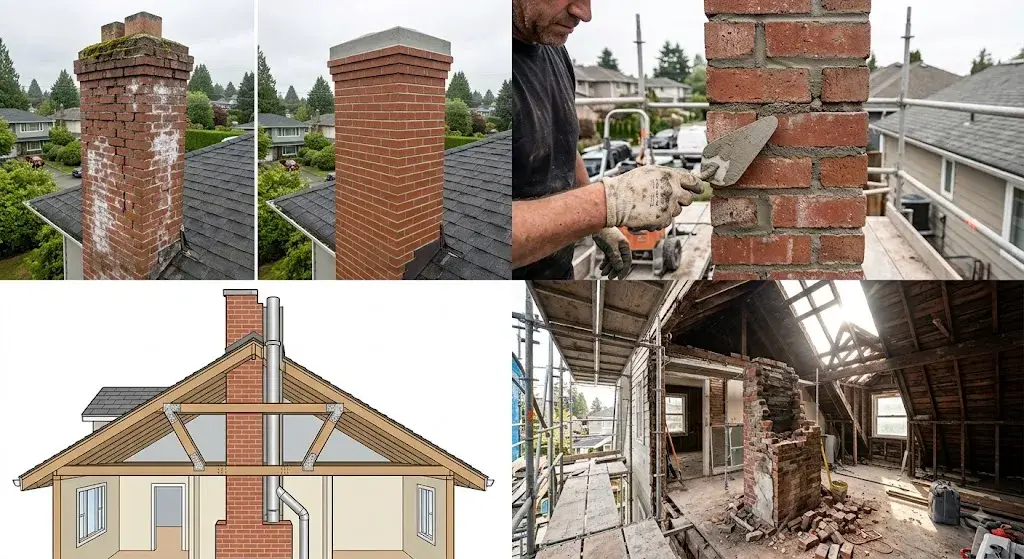
What Brick Chimney Removal Actually Involves
Brick chimney removal is the controlled demolition of a masonry chimney structure, done in a sequence that protects the surrounding roof, walls, and interior spaces. Unlike knocking down a wall, it’s not a straightforward teardown — a brick chimney is typically:
- Heavy. A standard brick chimney contains roughly 1,000 to 3,000 individual bricks, weighing several tons in total once mortar and flue material are included.
- Structural in some homes. Older chimneys were sometimes built as part of a home’s load-bearing structure, meaning removal can require temporary or permanent structural support.
- Connected to multiple systems. The flue, damper, firebox, and roof flashing are all tied to the chimney, so removal touches roofing, interior finishing, and sometimes framing.
That’s why brick chimney removal is treated as a masonry and structural project, not general demolition — and why it’s worth working with a chimney removal service that understands masonry specifically, rather than a general demolition crew.
Signs Your Brick Chimney Might Need to Come Down
Removal isn’t usually the first option — but for some chimneys, it’s the right one. These are the signs worth paying attention to:
- The chimney is no longer connected to a working fireplace or heating appliance
- Repair costs are approaching or exceeding what removal and patching would cost
- There’s visible leaning, bulging, or separation from the exterior wall
- The chimney sustained major damage from a storm, fire, or seismic movement
- It’s blocking a planned renovation, addition, or roof replacement
- It’s become a chronic source of leaks or maintenance costs with no end in sight
If none of these apply and your chimney is structurally sound, repair is almost always the more cost-effective route. Removal is a last resort, not a default.
Repair, Cap, or Remove? The Three Real Options
Homeowners often assume it’s a binary choice — fix it or tear it down — but there’s a third option worth knowing about: capping, sometimes called closing up a chimney. This involves sealing the damper, installing a proper cap, and closing the fireplace opening without removing the physical structure. It’s a lower-cost alternative when:
- You want to stop using the fireplace but like the exterior look of the chimney
- The chimney isn’t causing structural or water-infiltration problems
- You might want to reactivate it in the future
Capping isn’t right for every situation — it doesn’t help if the chimney itself is deteriorating or in the way of construction — but it’s worth raising with your contractor before committing to full removal. For a closer look at how repair and rebuild decisions are made, see our guide on chimney repair vs. rebuild.
Why Brick Changes the Removal Process
Material is the single biggest factor separating a straightforward chimney removal from a complex one. Brick and stone chimneys are dismantled differently than metal or prefabricated units:
| Factor | Brick/Masonry Chimney | Metal/Prefab Chimney |
| Method | Dismantled brick by brick, top-down | Often removed in sections |
| Debris weight | 2–6 tons of brick and mortar | Minimal — lightweight materials |
| Typical timeline | 2–7 days depending on scope | Often under a day |
| Structural review | Frequently required | Rarely required |
| Disposal | Requires debris hauling, sometimes recycling | Standard waste removal |
This is also why brick chimney removal tends to cost more than removing a lighter chimney of the same size — the weight and structural role of masonry simply demand more labour, equipment, and disposal effort.
What Happens During a Brick Chimney Removal: Step by Step
A properly managed brick chimney removal generally follows this sequence:
- Assessment and engineering review — determining whether the chimney plays any structural role and whether temporary supports are needed
- Permitting — securing the required municipal building permit before any demolition begins
- Site protection — setting up tarps, containment barriers, and debris chutes to protect the roof, attic, and interior
- Demolition — dismantling the chimney from the top down, brick by brick, to control dust and prevent sudden structural shifts
- Structural work — installing supports where the chimney was load-bearing
- Sealing and patching — closing the roof opening or exterior wall gap with matching materials and proper flashing
- Debris removal and cleanup — hauling away several tons of brick, mortar, and flue material, then a final site clean
Skipping steps — particularly the engineering review and proper sealing — is where DIY and budget removal jobs tend to go wrong, leading to leaks or structural settling months later.
Do You Need a Permit to Remove a Chimney in BC?
Yes. Most municipalities across Metro Vancouver require a building permit before any part of a chimney is removed, particularly when the work affects the roofline or the home’s structure. Permit requirements typically cover:
- Structural review sign-off, especially for load-bearing chimneys
- Roofing changes where the chimney passed through the roof
- Inspection at completion to confirm the work meets code
Permit timelines and requirements vary slightly by municipality — Vancouver, Burnaby, Surrey, Richmond, New Westminster, Port Moody, and Port Coquitlam each administer their own approvals. A chimney removal contractor who regularly works in your municipality will already know the local process and can typically handle the permit application on your behalf, which saves weeks of back-and-forth if you’re not familiar with the system.
Partial vs. Full Removal
Most brick chimney removals fall into one of two categories:
- Partial removal takes down the chimney above the roofline only, then seals and patches the roof opening. It’s the more common and more affordable option, especially for chimneys that run through the interior of the home but are no longer in use above the roof.
- Full removal takes the chimney out entirely, including the portion running through interior floors, which involves more structural work, interior patching, and sometimes flooring repair.
Which one makes sense depends on your specific chimney’s construction and your plans for the space it occupies. Our full chimney removal services page breaks down these options in more detail, including current pricing.
What Happens to the Space Afterward
Once a chimney is removed, the opening needs to be properly closed and integrated with the rest of the home:
- Roof openings are patched with matching roofing material and new flashing to stay watertight — a step closely tied to your broader roof repair needs if the roof around the chimney was already aging.
- Interior openings, for full removals, are drywalled, floored, or framed to match the surrounding room.
- Exterior wall openings, for chimneys removed to ground level, are sided or finished to blend with the home’s exterior.
Many homeowners use the reclaimed interior space for a closet, a slightly larger room, or a more open floor plan — something worth factoring into the decision if the chimney hasn’t been used in years.
How Much Does Brick Chimney Removal Cost?
Because brick chimneys are heavier and often more structurally involved than metal ones, they typically cost more to remove — pricing depends on whether it’s a partial or full removal, the chimney’s height and location, and whether structural work is required. For a detailed cost breakdown by removal type, along with what’s included in a free estimate, visit our chimney removal cost and services page.
Choosing a Chimney Removal Company or Contractor
Not every demolition contractor is set up to handle masonry chimney removal correctly. Before hiring a chimney removal company, it’s worth confirming:
- WorkSafeBC certification and full insurance coverage, since chimney work happens at height and involves structural risk
- Permit handling experience in your specific municipality
- A written scope that separates demolition, structural work, patching, and debris removal
- A plan for debris disposal — brick and mortar are heavy, and hauling isn’t always included by default
- References or examples of completed brick chimney removals, not just general renovation work
A contractor who specializes in masonry — rather than general demolition — will typically catch structural and moisture issues that a non-specialist would miss, which matters both for safety and for avoiding costly surprises after the job is done.
Frequently Asked Questions
Is it better to repair or remove a chimney?
It depends on the chimney’s condition and role. If repair costs approach or exceed the cost of removal and patching, or the chimney is structurally unsound, removal often makes more sense. If it’s in good condition, repair is almost always the more economical choice.
How long does brick chimney removal take?
Partial removals above the roofline typically take 2 to 4 days. Full removals, including interior sections, generally take 4 to 7 days, depending on structural complexity.
Do I need an engineer to remove a chimney?
If the chimney plays any load-bearing role in your home’s structure, yes — a structural engineer should confirm what support is needed once it’s removed. Many chimney removal contractors coordinate this as part of the project.
Can I remove a chimney myself?
It’s not recommended. Brick chimneys are heavy, can be structurally significant, and require careful sequencing to avoid sudden collapse or damage to the roof and interior. This is height-based, structural work best left to licensed professionals.
Will removing my chimney lower my home’s value?
It can go either way. Removing an unused, deteriorating chimney can add usable space and reduce maintenance costs, which some buyers value. On character or heritage homes, an intact chimney can be a selling point. It’s worth weighing against your specific property and market before deciding.
Whether you’re dealing with a chimney that’s beyond repair, blocking a renovation, or simply no longer needed, the safest next step is a professional assessment rather than guesswork. Contact us for a free inspection — we’ll tell you honestly whether repair, capping, or full removal is the right call for your home.