
Why Vancouver Chimney Inspection Matters: Critical Warning Signs Homeowners Miss
Regular chimney inspection can reveal critical warning signs that most Vancouver homeowners overlook until costly damage occurs. Deteriorating mortar, moisture buildup, and structural issues often go unnoticed for years, leading to expensive chimney repair vancouver projects that could have been prevented. Vancouver’s wet climate makes chimneys especially vulnerable to water damage and premature deterioration. This guide covers the warning signs you shouldn’t ignore, explains when emergency chimney repair vancouver becomes necessary, details different inspection levels, and helps you understand when chimney sweep vancouver services can prevent minor issues from becoming major problems.
Why Regular Chimney Inspections Are Essential
Safety hazards from neglected chimneys
Chimney-related fires caused an average of 22,300 structure fires annually in the U.S. between 2011 and 2013, resulting in 60 deaths during that three-year period [1]. The most common cause remains lack of maintenance. Your chimney liner creates the critical barrier between intense combustion heat and your home’s combustible materials. When liners crack or deteriorate, that protective barrier fails [1].
Chimney fires burn exceptionally hot, often exceeding 2,000 degrees Fahrenheit [1]. A damaged liner can’t contain that heat, allowing flames to reach wooden framing, insulation, and other flammable materials in walls and attics. Many homeowners don’t realize a chimney fire is occurring until flames break through into living spaces or neighbors notice flames shooting from the chimney top [1].
Creosote buildup accumulates in neglected chimneys and acts like kindling when exposed to high temperatures. This highly flammable substance ignites easily and burns intensely [1]. Regular chimney sweep vancouver services remove this dangerous buildup, but when maintenance is deferred, creosote levels reach dangerous concentrations.
Carbon monoxide poisoning kills families every heating season, often while they sleep [1]. This colorless, odorless gas builds up when your chimney can’t properly vent combustion gasses outside your home. Birds’ nests, debris accumulation, or structural damage block your chimney’s ability to create proper draft. When combustion gasses can’t exit efficiently, they back up into your home through the fireplace opening or through cracks in the chimney structure [1].
Partial blockages are particularly dangerous since they allow your fireplace or heating appliance to operate, but not safely. Carbon monoxide slowly accumulates to dangerous levels without obvious problems. Symptoms like headaches, fatigue, and nausea get mistaken for flu or stress, allowing exposure to continue until serious health damage occurs [1].
Vancouver’s unique climate challenges
Properties surrounded by large trees face accelerated chimney damage in Vancouver’s wet environment. Prolonged dampness and plant debris can damage the chimney lining without obvious surface symptoms [2]. Tree coverage creates additional moisture retention around chimneys, compounding Vancouver’s already challenging climate conditions.
Rain, snow, and humidity seep into cracks, leading to water damage, rust, and deterioration. Moisture weakens the chimney structure over time, necessitating extensive emergency chimney repair vancouver projects. Water causes mortar joints to erode, leading to crumbling bricks [2]. When moisture enters cracks in bricks or mortar, it expands during freezing temperatures and causes further deterioration. Over time, this moisture damage weakens structural integrity and exposes flammable components of your home to excessive heat [3].
Dramatic temperature changes cause materials to expand and contract, creating cracks and gaps in your chimney. When temperature rises, masonry expands; as it cools, it contracts. This cycle weakens the structure over time [2]. Strong winds contribute to physical wear and tear, causing loose bricks and mortar to dislodge and leading to structural instability. Wind-driven rain penetrates cracks, exacerbating existing damage [2].
Insurance and liability concerns
Insurance companies investigate chimney fires carefully, and coverage can be denied if negligent maintenance contributed to the fire’s cause or spread [1]. Most policies won’t cover damage deemed gradual or pre-existing. Documentation becomes crucial when filing claims [2].
Insurers may see the risk as too high or deny claims related to deterioration if your chimney is neglected with cracks in masonry, flue liners in poor condition, or buildup of soot and creosote [2]. Having proof of inspection and cleaning helps. If a fire starts in your chimney or smoke damage occurs, insurers may request documentation of regular maintenance or that repairs were done in a timely manner. That can be the difference between a denied claim and one that’s covered [2].
Annual chimney inspection records show you’ve been proactive in keeping your structure sound [2]. Some insurers require annual or semi-annual inspections for wood-burning setups. A chimney inspection from a licensed professional provides a damage assessment that insurance adjusters consider credible [2]. Without this documentation, claims related to chimney damage often face denial, leaving you responsible for costly chimney repair quote vancouver expenses.
Critical Warning Signs Most Homeowners Overlook
Moisture and vegetation growth on exterior
Walk around your chimney and examine the bricks closely. White, chalky deposits across the masonry indicate efflorescence, a mineral residue that appears when water evaporates and leaves behind salt deposits [2]. This signals excessive moisture absorption in your chimney structure. Moss or algae growth on the exterior, particularly near flashing lines, reveals persistent moisture problems [2].
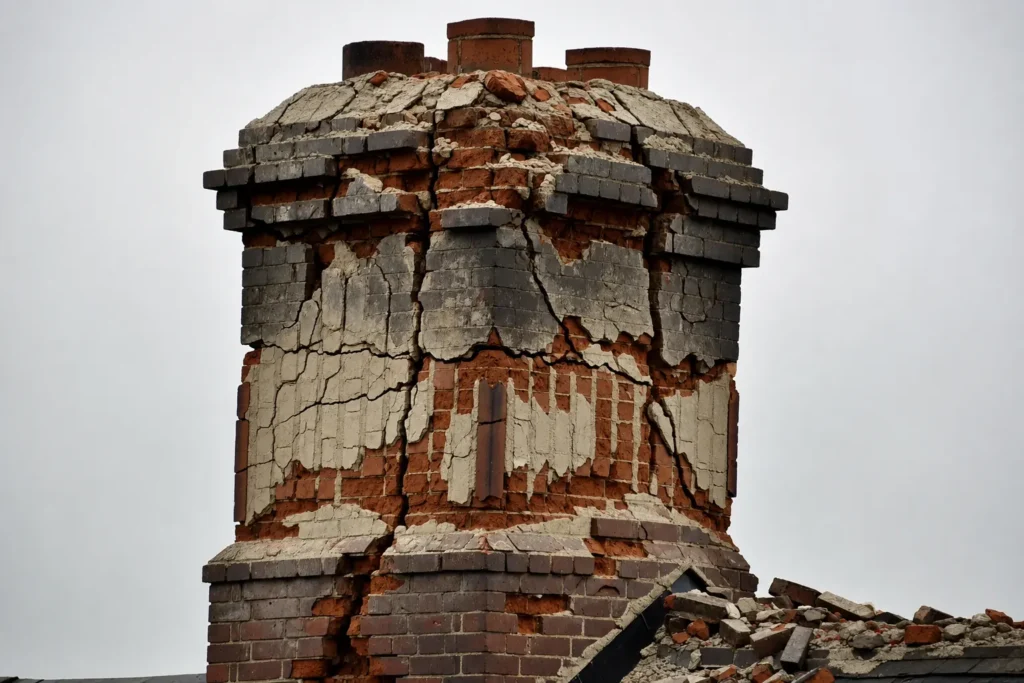
Spalling becomes visible when brick surfaces break off or flake apart. Bits of broken brick around your chimney base or on the ground below confirm moisture has penetrated deep into the masonry [2]. Freeze-thaw cycles cause trapped water to expand, making bricks brittle and causing them to crumble [4]. Plants sprouting from your chimney aren’t quirky additions but red flags. Root systems penetrate mortar joints and bricks, causing cracks and weakening the structure [5].
Missing or damaged chimney cap
Water pooling in your firebox after rain points directly to cap failure [6]. Check the cap for rust stains, flaking metal, or torn mesh sides. Animals entering your chimney through damaged or missing caps create nests that block ventilation [6]. Debris accumulation including leaves and branches indicates your cap isn’t protecting the flue opening properly [6].
Deteriorating mortar and brickwork
Mortar joints tell a critical story about your chimney’s condition. Cracked, crumbling, or recessed mortar creates channels for water infiltration [2]. Damaged mortar fails to keep moisture out, and the masonry can begin to lean, potentially requiring complete chimney rebuild [2]. Look for step cracks through mortar or vertical cracks through bricks themselves. Both signal structural compromise requiring immediate chimney repair vancouver attention.
Interior staining and dampness
Light brown to dark black discoloration on ceilings, walls, or wallpaper near your chimney starts small but expands gradually [2]. These stains signal water has penetrated through masonry cracks. Warped baseboards and flooring next to the fireplace are clear chimney leak repair vancouver indicators [2]. Peeling paint or bubbling drywall above the mantel appears long before full stains develop [2]. Bulges in ceilings adjacent to the fireplace require professional attention immediately [2].
Leaning or structural instability
Visible tilting or separation from siding indicates serious structural concerns [5]. Check the vertical caulking along your house where the chimney meets exterior walls. Torn or separated caulk signals the chimney is pulling away [7]. Gaps between the chimney and home, combined with cracks in adjacent walls, point to foundation settlement or soil movement [5]. Any change in vertical alignment deserves evaluation, because leaning chimneys present extreme hazards to your home and family [5].
Strange odors and poor draft
Musty smells after precipitation indicate moisture penetration and potential mold growth in damp areas [2]. Creosote mixed with moisture creates strong, unpleasant burning odors during humid weather [8]. Animal waste or decomposing animals trapped inside produce intense foul odors [8]. When odors chronically fill your home, draft problems may be pulling air down through your chimney in reverse [8].
What Happens When You Ignore These Warning Signs
Water damage progression
Water infiltrates masonry and begins a destructive process that accelerates with every weather cycle. Once moisture penetrates bricks and mortar, it doesn’t evaporate away but works deeper into the structure, weakening the bonds holding everything together. When water inside your chimney’s masonry freezes, it expands by approximately 9% [6]. This expansion creates tremendous pressure within the tiny pores of bricks and mortar joints.
Temperatures rise and the ice melts, but the damage persists. Microscopic cracks have formed. This freeze-thaw cycle repeats dozens of times throughout winter. Each cycle makes existing cracks larger and creates new ones. What starts as invisible damage quickly becomes visible spalling, where pieces of brick face flake off and mortar joints begin crumbling [6].
Water doesn’t respect boundaries. Once it penetrates your chimney system, it spreads to surrounding areas. Interior walls and ceilings near your chimney become the first casualties. Water stains, peeling paint, and warping wallpaper indicate more serious problems hidden within wall cavities [6]. Moisture creates ideal conditions for mold and mildew growth, which actively break down organic materials including drywall, wood framing, and insulation [6]. Water infiltration can cause corrosion in electrical connections, leading to short circuits, power outages, or electrical fires [6].
Structural collapse risks
Collapsing masonry chimneys can be fatal if they fall onto occupants [9]. The heavy weight of damaged masonry presents extreme danger during collapse. Chimneys collapse from damaged masonry due to frost or water, inadequate footing, insufficient lateral support, or lacking reinforcement in earthquake-prone areas [9]. Structurally compromised chimneys can fall, damaging your roof and putting people at risk [10].
Health hazards from mold and carbon monoxide
Carbon monoxide poisoning claims roughly 500 deaths each year in the U.S. [4]. Over 430 people die annually from unintentional carbon monoxide poisoning, and approximately 50,000 require hospitalization due to accidental CO poisoning [11]. Damaged flues or crowns let toxic gasses seep into your home [10]. When chimneys become blocked with debris from internal wall deterioration, toxic gasses enter living spaces rather than being released outside [12].
Mold remediation costs between CAD 696.68 and CAD 4,180.08 [13]. Persistent moisture from chimney leaks creates ideal conditions for mold and mildew growth, posing serious long-term health risks. Mold spores become airborne and circulate throughout your home via HVAC systems, triggering allergic reactions, respiratory problems, and other health issues, particularly in children, elderly family members, and individuals with compromised immune systems [6].
Increased repair costs over time
One Saint Paul home experienced a chimney fire that caused over CAD 20,900.40 in structural damage after nearly a decade without chimney inspection [14]. A Minneapolis family discovered severe water damage behind living room walls from a deteriorating chimney crown. Total costs for chimney repair vancouver, mold remediation, and drywall replacement exceeded CAD 13,933.60 [14]. Another case involving a partially collapsed flue liner and debris buildup required repairs exceeding CAD 9,753.52 [14]. The financial impact of interior damage often exceeds the cost of the original affordable chimney repair vancouver by thousands of dollars [6].
Understanding Different Types of Chimney Inspections
Level 1 inspections for routine maintenance
NFPA 211 defines Level 1 as the recommended inspection level for routine chimney cleanings and annual checks [2]. This inspection suits homeowners who haven’t changed their heating system and plan to continue using their chimney under the same conditions [2]. Readily accessible portions of the appliance and chimney get examined, meaning areas quickly reached without tools, ladders, or removal of panels [2].
Inspectors verify the system isn’t blocked and remains capable of continued safe use [2]. They examine the firebox, damper function, visible smoke chamber portions, and exterior structure [15]. Sweeping becomes necessary when buildup reaches 1/8th inch or greater [2]. This visit typically takes 30 to 60 minutes and doesn’t require camera equipment [16].
Level 2 inspections for property transfers or changes
Property sales or transfers require Level 2 inspections [5]. This level becomes mandatory after chimney fires, seismic events, weather incidents, or when changing fuel types [5]. Replacing an appliance with a different type, input rating, or efficiency also triggers this requirement [7].
Level 2 includes everything from Level 1 plus video scanning of the flue interior [15]. Inspectors examine attics, crawl spaces, and basements where the chimney passes through [7]. This inspection addresses proper clearances from combustibles in accessible locations [5]. The process takes one to two hours and provides photo documentation with a written report [15].
Level 3 inspections for serious damage
Level 3 becomes necessary when serious hazards are suspected and concealed areas need examination [5]. This inspection may require removing chimney components or building structure elements like crowns, interior walls, or siding [5]. Partial demolition sometimes proves necessary to access hidden damage [7].
Situations requiring Level 3 include collapsed flues, severe water intrusion, natural disasters, or repeated performance issues without clear cause [15]. Common findings include extensive creosote buildup, structural damage, deteriorated masonry, or hidden fire damage [17].
When to Schedule a Professional Chimney Inspection
Annual inspection timeline
The National Fire Protection Association requires chimneys, fireplaces, and vents be inspected at least once yearly [8]. Schedule this before the heating season starts, ideally in late summer or early fall [8]. Wood-burning fireplaces and stoves need annual inspection because wood fires produce creosote that builds up quickly and leads to chimney fires if not removed [8]. Frequent users may need multiple inspections per year [8].
Oil-fired appliances connected to chimneys require annual inspection since oil combustion produces soot that restricts airflow and potentially causes carbon monoxide exposure [8]. Even unused chimneys need yearly inspection because debris, animal nests, and weather damage can obstruct or weaken the structure over time [8]. Insurance companies may request proof of regular inspections if problems occur [18]. Keep documentation of all chimney inspection records for insurance purposes [19].
After severe weather events
Storm damage isn’t always noticeable and may be missed until major damage occurs [6]. Your chimney stands as the highest point on your home, making it vulnerable to heavy rain, high winds, and lightning [20]. Schedule chimney sweep vancouver services immediately after severe storms pass [6]. Heavy storms leave downed limbs and debris that get stuck inside your chimney liner [6]. This debris holds moisture, leaving your chimney susceptible to mold or future damage [6]. Thunder, lightning, and heavy winds frighten wildlife that may nest in your chimney [6].
Before and after home purchase
NFPA 211 guidelines require Level 2 chimney inspection when property changes ownership [21]. This inspection provides buyers peace of mind that the fireplace and chimney system functions safely [21]. Sellers benefit from proactive inspections by addressing issues in advance, preventing last-minute delays in closing [21]. Insurance carriers may refuse new policies if required inspections weren’t performed at sale time [22].
When converting heating systems
Level 2 inspection becomes mandatory when you change fuel types, modify the flue shape or material, or replace an appliance with dissimilar type, input rating, or efficiency [5]. Changes to your heating system alter how your chimney operates [19]. Finishing a basement, replacing windows, or improving insulation may alter fresh air intake, preventing complete combustion and increasing carbon monoxide production [19].
Conclusion
Your chimney’s condition directly impacts your family’s safety and your home’s structural integrity. Vancouver’s wet climate accelerates damage that starts small but quickly becomes expensive without professional attention. Regular chimney inspection catches problems before they require emergency chimney repair vancouver services or threaten your insurance coverage.
Schedule annual inspections before heating season begins, and without a doubt, call for professional evaluation after severe storms or when you notice any warning signs mentioned here. The cost of prevention remains a fraction of what you’ll spend on major chimney repair vancouver projects, water damage remediation, and potential health consequences from neglected maintenance.
References
[3] – https://mcpchimneyservices.com/blog/ignoring-chimney-maintenance-fire-hazards/
[4] – https://www.highschimney.com/carbon-monoxide-poisoning/
[5] – https://www.superiorchimney.net/2024/09/07/chimney-inspections-are-required-for-selling-a-home/
[6] – https://www.afiddlerontheroof.com/blog/3-reasons-to-have-a-chimney-sweeping-right-after-a-storm/
[7] – https://www.highschimney.com/what-are-level-1-and-level-2-chimney-inspections/
[8] – https://trueventilation.com/how-often-should-i-have-my-chimney-inspected/
[9] – https://inspectapedia.com/chimneys/Chimney_Collapse_Hazards.php
[10] – https://newenglandchimneyservices.com/structural-red-flags-is-your-chimney-safe/
[11] – https://fullservicechimney.com/caution-chimneys-carbon-monoxide/
[17] – https://kelownapromasonry.ca/chimney/what-is-a-level-3-chimney-inspection/
[18] – https://wellsweptchimneys.com/how-often-do-i-really-need-to-clean-my-chimney/
[19] – https://www.rbq.gouv.qc.ca/en/you-are/citizen/safety-advice/at-home/heating-systems/
[20] – https://englishsweep.com/4-tips-when-inspecting-your-chimney-for-storm-damage/
[22] –https://www.oaciq.com/en/general-public/have-your-fireplaces-stoves-and-chimneys-inspected/